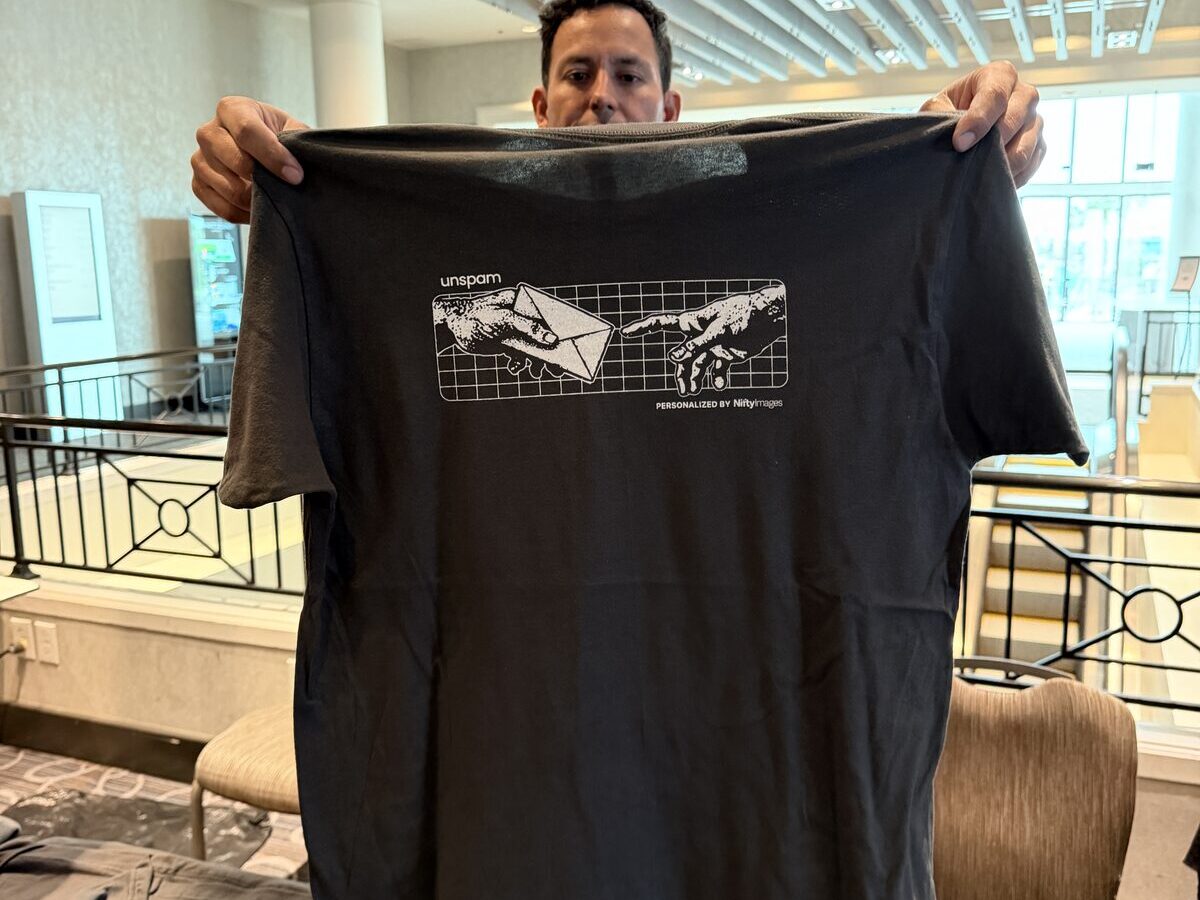
An LA activation depends on whether people stop. A press running in the middle of the room makes them stop, and guests leave with something they watched get made. We drive up from La Habra the morning of, so the build fits your load-in window and there's no travel line on the quote.
What our live t-shirt printing setup brings to an LA activation
- A station styled to the campaign. Backdrop, signage and garment colors chosen to match the brand, so it doesn't look like a rental table.
- Personalization. Names, dates or handles pressed per guest with DTF, so no two pieces match.
- A choose-your-own hat bar. Guests pick the cap and the patch, and that choice is the photo.
- A plan for the queue. Where the line forms, where people pick sizes, and where finished pieces get handed over.
Recent LA work: for Visa's World Cup jersey activation, four heat presses ran for five hours and personalized jerseys for 440 guests, with name drops for 45 VIPs (case study). At a collab launch at Laya in Hollywood, two embroidery machines stitched caps and crewnecks for 35 guests in one evening (case study).
Where LA activations happen
In LA the room does half the work. ROW DTLA in Downtown LA has raw warehouse space that suits a brand house or a product reveal. The Petersen Automotive Museum gives a launch a backdrop people already want to photograph. Past LAX, the El Segundo and South Bay tech campuses have courtyards big enough for two or three stations. On the Westside, Century City sponsor lounges want a clean, branded station that looks finished. Per-guest names through live DTF and a hat bar are what turn a logo drop into content. Plenty of these sit inside a bigger corporate program or a trade-show week.
Space, power and timing for a live printing booth in Los Angeles
Plan on a 10×10 ft footprint and two 120V/20A circuits for each station. At a warehouse venue like ROW DTLA, ask the venue which outlets are on separate breakers before the floor plan is locked, because a heat press and a DJ rig on the same circuit will trip it mid-launch. A museum like the Petersen sets its own load-in times and rules on where equipment can roll, so we get those from your venue contact a week or two out. On an El Segundo campus courtyard the facilities team usually owns the exterior outlets. If they can't give us two circuits, we bring a quiet generator and put it on the plan.
Pace is the other number brands ask about. A standard two-press station runs 100+ pieces an hour at about two minutes each, and name drops add a few seconds for typing and placement. For a bigger room you add presses, which is how the Visa jersey activation got through 440 guests in five hours on four presses. We drive up from La Habra the morning of, so the station can be built and tested before your first guest checks in.